
All images below are thumbnails only; Full versions may been seen in the SimHQ article linked above.
Q & A
John
Bruning
by
John
"Spoons" Sponauer
Originally
Published on
May
2, 2001 by
All images below are thumbnails only; Full versions may been seen in the SimHQ
article linked above.
CRIMSON SKY
Your book was a very interesting synopsis of the air war over Korea. What made you decide on that topic as your focus?
There are so few books on the Korean Air War that I figured it would be fertile ground. I want to write about things that nobody has ever devoted much attention to, and Korea seemed like a good place to do just that. Besides, the aircrew who fought in Korea deserve far more recognition than they received.
While there are shelves of books on the war in the air during WWII, Korean War material is harder to find. However, it seemed that there was a resurgence of the topic a few years back. In your opinion, why has there been fairly muted attention made to the war?
The resurgence has to do with the 50th Anniversary. However, Korea will never have the popularity of WWII. It was an ugly, gruesome, horrible war, and we didn’t win it outright. World War II was a crusade against a terrible evil that everyone in the US can relate to in some manner. Fighting to defend South Korea is far less romantic and more remote to most Americans. That obscures the importance of the war and the accomplishments our men and women made in it.
How long did Crimson Sky take to write, from start to finish?
I started writing and researching in early 1997. It was finished in early 1999 and reached the shelves in early September, 1999.
How did your preconceptions of the Korean War change, if at all, in doing the research and writing for Crimson Sky?
I always thought we had our way in the air over Korea. The MiGs were there and were a nuisance, but little else. The reality was far different. We nearly lost control of the air on several occasions, and the MiGs forced the USAF B-29 squadrons to fly at night by late fall of 1951. That was an achievement that eluded even the mighty Luftwaffe during WWII.
In your opinion, from a political or military point of view, what did the US/UN forces do correctly or incorrectly during the course of the air war? What lessons does Korea give us for future wars?
The major lesson I think that can be drawn from Korea is that U.S. policy makers cannot use the USAF as a political instrument. That is what started happening in 1952-53. We did it again in Vietnam, with more restrictions. Also, putting unrealistic political restrictions on the tactical conduct of an air war is also counter-productive and just results in more American lives lost. Lastly, trying to fight a strategic air war against a surrogate of a larger power is also doomed to fail, as is a massive interdiction campaign against an army with a tiny logistical tail.
Was there any aspect to the war that you wished you had covered in Crimson Sky but didn’t or couldn’t? What was it and why were you not able to get into more detail on it?
I wish I could have devoted several chapters to USMC operations in the air war. The Marines did amazing things, and I didn’t cover them in detail in Crimson Sky. If I write a sequel, it will be very Marine-heavy!
Was there any one
moment in writing or researching the book that stands out in your mind
as a special event?
Interviewing Captain Thomas Hudner, the Medal of Honor winner, was to
me the most memorable. He is an amazing man. Speaking with
many of the other veterans who had never even told their wives what
they experienced in Korea also was very meaningful to me.
What has been the reaction from the Korean War veteran’s community to the book?
Very positive. I get letters, phone
calls and e-mails every day from those who served. Many have
just said "Thanks" for telling these "forgotten"
stories.
UPCOMING WORK
Tell us a little
bit about the books and projects you’re working on now.
My Opus Maximus is coming out this summer. Titled Jungle Ace, it
is a thorough biography of Colonel Gerald R. Johnson, a 22 kill ace
and one of the great USAAF fighter leaders of WWII. I wrote my
M/A thesis on him, and left Dynamix to turn his story into a book, but
then got sidetracked with Crimson Sky and Elusive Glory.
Elusive Glory will be out this summer. It is a series of
biographical sketches relating to the service of African-American
soldiers and aviators in Europe during WWII.
I just signed a contract with Pacific
Military Press to write an operational history of the USAAF in North
Africa, 1942-43. This will be amply
illustrated with profiles done by Jim Laurier.
I don’t think that if you asked most aviation enthusiasts to name the most well-known Pacific War fighter pilots, Jerry Johnson would be mentioned. Do you feel he’s been eclipsed by other pilots like Bong, McGuire, and Thach?
Johnson is not as commonly known for a couple of reasons. First, he eschewed publicity even more than Bong did. Second, he was fighting in a theater that is not as well known as the ETO or the USN ops in the Central Pacific. Third, George Kenney resolved during the course of the war to see that his command had the top USAAF ace. Bong and McGuire were cut loose to run up their scores, and Kenney made sure they had ample press coverage. This is not a knock on either ace, as they were both outstanding aviators. However, Johnson was both an outstanding pilot and a great leader. In fact, even though Bong was in the theater before Johnson was, Johnson became his squadron commander in August of 1943. Bong wasn’t a leader, McGuire irritated everyone, but served ably as a squadron commander. Kenney saw the potential in Johnson and groomed him for over a year to be a general. He was a full colonel at 24. Lastly, Johnson didn’t survive to tell his own story. Had he published his memoirs after the war, he’d be remembered ala Zemke, Godfrey, Jim Howard, Gabreski, etc.
What made you spend about a decade researching his life?
Johnson was a great guy. He had such a playful sense of fun, and he was such a daredevil that the guy just compelled me to write about him. Once I got started, I really believed his story should be told, for in his life you can see a microcosm of what World War II did to the entire United States. His life reflects how the webs of the country’s social fabric really unraveled and were rebuilt as a result of the losses suffered during the war. His neighborhood in Eugene, for example, saw many gold stars placed in the windows, and the resulting damage that did to the lives of those families really is not well understood today. WWII is the "Good War" and we don’t dwell on the personal loss and pain the nation went through as a result of our involvement. We do that with Vietnam, but not with WWII.
Tell us a little bit about the scope of your book on the North Africa campaign.
I’m going to focus on the tactical evolution of the USAAF. The Americans went into battle against the Germans without any clue as to how to fight in the air. We relied on the British to teach us, as a result. From that experience, the USAAF began developing its own tactics against the Germans and refined them in time for the invasions of Sicily and Italy. Learning under fire was a very costly way to do business. One squadron lost all but 3 of its pilots in the course of the Tunisian campaign.
The book will cover the period from June of 1942 through July of 1943, starting with the HalPro mission and ending with the invasion of Sicily.
How does your book research and background help in the creation of documentary scripts? How much control will you have over the final productions?
Research is research, be it for a book or for a documentary. For books, you rely a little more on the documentary record, while with documentaries, you rely more on visual things like photographs and interviews and footage.
You mentioned the Civil War project.....that seems to be a stretch from your aviation background. What’s the interest in that war?
Studied lots of Civil War history in graduate school, and while I’m no expert, I’m conversant in the history. I am actually a Civil War junkie, and go to the battlefields whenever I can. I also have a side project that’s purely for my own enjoyment of documenting all of the Civil War vets buried in my neck of the woods. I’ve found some amazing guys, including a Medal of Honor winner buried in Eugene.
What traits must a successful historian writer have?
Let’s see: patience is a very good trait to have. I’d say the ability to see both the trees and the forest, which I have trouble with still. You’ve got to be able to see the big picture while understanding the bits and pieces that go into it. Flair for detail helps as well. Really, though, all you need is a passion for your subject. Without passion, nothing can ever be great.
FLIGHT SIMS
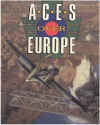
In addition to your historical studies of aviation history, you were also responsible for much of the research that went into several classic flight sims – Aces of the Pacific and its add-on, Aces over Europe, and Red Baron II. How did you come to work at Dynamix? Was it driven by your interest in aviation history, or was it the other way around?
In the spring of ’90 I went to the
local mall in Eugene to break in my new Visa card. I ended up at
the software shop there, talking to the clerk about some of the SSI
games I’d worked on during the summers of ’88 and ’89.
Jeff Tunnell, one of the founders of Dynamix, overheard the
conversation and came over to talk to me. He asked me if I’d
want to work on a WWI flight sim. A few weeks later, I went in
for an interview, even though I didn’t really want/need a job at the
time. I was finishing my B.A. and was about to start graduate
school at the U of O.
Well, I hit it off with Damon Slye, the other founder, and ended up
working on Red Baron through the summer of ’90. When school
started, we were in crunch mode, which made focusing on my courses
very tough. Through much of my Dynamix career, I struggled to
balance my work load there with my graduate school work.
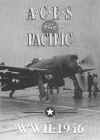
I did the historical research for Red Baron, Red Baron Mission
Builder, did some work on A-10E, did the research for Aces of the
Pacific, Aces 1946, Aces Over Europe and Red Baron II. In 1994,
Damon got burned out and left. I took over as designer for the
flight sim team and designed Red Baron II.
Tell us a little bit about your involvement in each of the games you worked on.
See above. I designed and redesigned RBII through 1994-95. When a new project manager took over the team in 1995, we finally had some order and made progress. But, in March of 1996, I decided to go start writing books, so I quit. Dynamix came back to me in the summer of 1997 and asked me to come back as a consultant to finish up RBII, which I did. After that, I consulted on several phantom projects, including Aces over Korea, Aces of the Pacific II and Desert Fighters.
Dynamix seemed to be at the height of its game, so to speak, but then seemed to die a pretty ugly and sudden death. As someone who was at the company at its peak and there for the end, what was the inside story?
The death was ugly, awful, terrible and ultimately caused all of us a lot of grief. Basically, the descent began after AOTP shipped. We had all worked 80-100 hour weeks from January of 1992 through its release in May. I had to withdraw from several of my grad school classes because of the pressure to ship. There was some sort of a stock offering depending in part on AOTP.
Many of the team members were burned
out, so it took us a year to ship AOE, which was really originally
designed to ship for Christmas of 1992. Motivation became a
major issue, and many of the best guys left during or after AOE.
Most notably, Chris Reese left. He was a great engineer.
Chris Shen, our designer, also left. His loss was very serious.
Lincoln Hutton, our genius sim engineer, also burned out and went to
the former Yugoslavia to work in the refugee camps there. He
later returned to Dynamix, but never worked on flight sims again.
Worst of all, Damon Slye left. He was the heart and soul of the
flight sim team. He took input from all of us and crafted a
compelling vision that resulted in the Great Warplanes line. He also
shielded us from tremendous political forces within the company.
When he left, we lost our prime advocate, and chaos followed.
I started designing RBII in February of 1994. In the space of
two years, we had over 10 new managers comes and go on our team and
department. It was utter, total chaos, and one of the guys
declared in a company meeting we were victims of "The Vision of
the Month." It was very true. Every time we had a
change in management on the team or department, I was asked to rewrite
the RBII design. I think I rewrote it to fit the vision of the
latest manager probably close to a dozen times—and this was a 150
page document. The company waffled back and forth over what RBII
was going to be—a small project or a flagship title. Then, our
fate was pinned to the A-10 II team, which was supposed to develop our
technology. The A-10 II team was run by a totally incompetent
person who had hired a bunch of green engineers and support people.
They floundered and created almost nothing until in 1995, the manager
was summarily canned and the team broken up. Aside from a little
artwork and a few design concept documents, the team had spent
hundreds of thousands of dollars for nothing. Later, a new team
put together A-10 II as an arcade game to try to salvage something.
It shipped after I left.
Meanwhile, several of the RBII engineers accomplished nothing from
November of 1993 through the spring of 1995. With the manager
turn-over rate so high, nobody was accountable. We had an
engineer working on our new flight models for nearly two years without
anything to show for it. No accountability. I raised this
issue on several occasions, only to get reprimanded.
Getting increasingly frustrated, I thought about leaving. Through much of 1994, however, I ended up writing and researching Aviation Pioneers, a multimedia CD-ROM history of flight from 1903-39. That is, between rewrites of the design. In early 1995, a new manager took over our department and nearly canceled RBII. He took me into his office and said the only reason why the project didn’t get canceled was the design document. It showed some progress had been made.
This new manager brought in a new manager to run the team. He originally was brought in to produce a jet sim, and he’d been one of the key guys on Falcon 3.0. But he was shifted over to RB II and promptly took a look at the lack of progress and raised hell about it. He then either drove out of the company or removed from the team several guys he did not think were cutting it. However, as unhappy as he made everyone on the team (except me, he and I became good friends since I credited him with saving the project), he lit a fire under everyone and we soon had some really neat stuff to show for all our work. Through 1995, we worked hard and developed a very cool sim.
Then, over Christmas break, our CEO was on vacation in Hawaii with his family. This was one of his first breaks in years. He got a call from the power-that-was at Sierra and was summarily relieved of command. A new CEO took over at that point, and he went to work restructuring the company in early 1996. A lot of people were laid off, and flight sims went from being the flagship product to the ugly step-child that nobody wanted to touch. He wanted to see RBII to be just a small upgrade from the original, but here we’d made a year’s worth of progress on our last set of marching orders—make it a great flagship world-beater—so there was lots of resistance to the new mandate.
At that point, I gave eight weeks' notice and left. All of this had ripped my heart out...I couldn’t sleep, and every change in direction was sending my blood pressure through the roof. After I left, it was like a weight being lifted off me. I spent the next 18 months writing the Johnson biography. Then, in the summer of 1997, the division manager asked me to come back and help finish RBII. I returned, began working on all the historical data input and discovered my old team had really gone through hell while I had been away. In August, the team rebelled against the team leader and told senior management that they could not finish RBII by Christmas of 1996 with his as their leader. I was his only ally in this matter, as I still credited him with saving the project. But in the interim, he had ridden everyone on the team real hard.
Anyway, he was thrown off the team, and a new manager took over. He was an engineer who didn’t really have much invested in flight sims, and he left right after RBII shipped. The team killed itself from August of 1997 through December trying to finish RBII. One engineer named Hugh worked 72 hours straight over Thanksgiving. Others worked equally as hard, though a few slacked off and earned the scorn of the team. Anyway, in early December we though we’d finally had a build worth shipping, but when we tested it, we discovered a bug that prevented many kinds of NPC aircraft from getting off the ground. It was 4:00 AM and everyone just crashed, sleeping in offices, on floors, couches, etc. That morning, the engineers fixed it as best they could, then we shipped it. It frankly was released with too many bugs and major compromises, but if it hadn’t have shipped that December, it would have probably been canceled and the team reassigned.
After that, we were supposed to go on to Aces Over Korea. The company had sent me on a research trip in the summer of ’97 to get the images and information we needed to do that project. But, it was put on indefinite hold and the team was assigned to do Aces Of the Pacific II. Things were coming together, though the team was going through managers at an alarming rate again. Finally, in 1998, we got a new department head and the chaos was controlled. The guys working on AOTPII made amazing progress, and it finally looked like we’d turned the corner. I was consulting still, then came back ½ time while spending the rest of my time on my book projects.
In early ’99, just after we had gone on a research trip and interviewed numerous PTO aces I knew for the shell part of AOTPII, Dynamix’s new parent company, Havas, decided to cancel the project. Sierra had long owned Dynamix, and it had been purchased sometime before by another company that ended up getting caught cooking the books. The stock price had plummeted as a result, so the company sold the software division to this European firm, Havas. That sale doomed the flight sims.
The sims were money suckers. They took a lot of time, they required extremely talented people to execute, and also demanded a narrow range of skills for several key positions. At the same time, the infusion of cheap PCs changed the whole gaming industry. Sales of arcade games, first person shooters, and what Dynamix called its "3D Ultra" titles shot through the roof. Most of these were far cheaper to produce than flight sims, and sold more units. Naturally, Havas saw this and started moving Dynamix more and more in that direction. While the flight sims from 1990-95 had been the bread-and-butter for Dynamix, they had always been a lucrative niche product. Now, with the market expanding in other directions, Havas began restructuring Dynamix to meet the new demands.
After AOTPII was canceled, part of the team moved onto Desert Fighters, while the rest were reassigned. I was put on Desert Fighters, researching and assisting the designer, Doug Johnson. I came back in ’97 as a historical consultant, so I didn’t have much influence on the design. And, as the chaos from ‘97-98 grew, I tried to stay removed as much as possible for my own sake. I was down twice a week in the building, the rest of the time I worked from my office up here in Independence.
In September of 1999, Desert Fighters was cut. The civilian flight sim team was also cut. In fact, the entire Sim Department was shut down and most everyone was laid off. Some left to form a new company, and many of the sim guys went and started another one. Many others, who had left during the chaos of ‘97-98, went up to Microsoft, where they have been responsible for the success of Combat Flight Sim II. That includes Tucker Hatfield, who is one of the best sim guys in the industry and became one of the Combat Flight Sim II managers.
The Dynamix story is very sad. The sim team had great potential, had made some of the best sims of their day during its first four years, but then after Damon left, everything began sliding downhill. It is an example of how-not-to-run a department from top to bottom. My dad, John Sr. was a VP for National Semiconductor during his own high-tech career, and I would frequently explain to him what was going on at Dynamix. He told me repeatedly to get out, for nothing good could come out of such turmoil.
The good news is this: After the September ’99 layoffs when almost all of the remaining "old guard" from the late 80s and early 90s left the company, Dynamix restructured itself again and is competing successfully in the new marketplace.
What can you tell us about two projects that you worked on that never saw the light of day, Aces of the Pacific II and Desert Fighters?
See above! Desert Fighters would have been a very cool game, but it again suffered from lack of overall vision and conflicting demands. After Mike Jones took over the department, stability was restored and DF was making great progress. An earlier title, The X-Fighters, was canceled after lots of money was squandered on it.
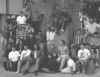
The Dynamix Team from the Aces of
the Pacific: 1946 Add-On
(John Bruning in white and black checkered shirt on the middle left
side)
I still have my
manuals from AOE and AOTP, because all by themselves they make great
quick references to the war. You don’t often see that type of
manual anymore in sims, sadly. How much latitude did you have in
the creation of them? In your opinion, how important is a
strong historical manual for a flight sim?
Manuals like the ones were did for RB, AOTP and AOE are rare these
days because they are so expensive. With the color plates, I think
they cost us about $5.00 each. That was a lot even back in the
early '90s when companies could charge $69.99 for a flight sim.
But, with the broadening of the market, the price points have dropped
and thus they are uneconomical.
Damon always believed we needed a very
thorough historical manual. He gave us writers plenty of leeway
to write what we thought was important. He would review it, make
changes, and we’d argue! But, he would always listen, and if
we made our points, he’d let us do what we felt best. Damon
was a great guy, and while he and I had some pretty serious clashes,
he remains in my eyes the best guy I ever worked for at Dynamix.
He knew what he was doing, and he believed in making things both fun
and accurate. We used to call our look "The Time-Life
feel." Damon was responsible for that. Capturing the look and
feel of a time is what we were all about. Giving the player a
flavor of what it was like was our goal.
As far as the importance of historical manuals now, well I’d say
they are still important. A lush manual adds to the value of a
sim. If a company releases a title with a crummy manual, you can
bet they cut corners elsewhere. Fighter Squadron and Luftwaffe
Commander come to mind.
But, keep in mind also that it takes a historian, not just a writer--but a historian—to put together a quality historical manual. And most companies aren’t willing to spend the money to do this right. I remember reading the historical notes in one WWI sim and finding all sorts of errors. That’s what happens when a writer with no historical training picks up two books then tries to regurgitate it. It is a lot like watching journalists flounder around in history. All sorts of mistakes happen when print/TV journalists foray into the past.
Do you still enjoy flight sims? If so, which ones?
Yes, I love Microprose’s European Air War. Great sim, but from the numbers I saw, it got hammered by Combat Flight Sim. Combat Flight Sim II is also very good.
BACKGROUND
Tell us a little bit about your background. What inspired you to
pursue historical research, and specifically aviation-related
research?
I grew up in the Silicon Valley in town called Saratoga, near San Jose. I graduated from Saratoga High in 1986, then moved up to Eugene to study history at the University of Oregon.
My love of aviation history is a result of my father’s influence. John Sr. grew up in Southern California during WWII and saw all sorts of interesting aircraft that sparked his interest. At one point, a Marine F4U from El Toro belly-landed on the beach in front of his house on the Balboa Peninsula as a result of mechanical troubles. So, he has had a life-long passion for it. He gave me the bug when I was 3 years old. He came out one morning and announced it was time for me to build a model, so my mom took me down to Woolworth's and bought me the Hawk 1/72nd scale Spirit of St. Louis. I still have the wings to it, but the rest of it is long gone!
In 2nd grade, I found a copy of Walter Lord’s "Incredible Victory" in the garage. I spent about 6 months wading through it, but it hooked me. I started reading anything I could on military history, and in 6th Grade decided I would write a history of the Battle for Wake Island. I wrote to a bunch of the Wake veterans, talked to several on the phone, and while I’ve never written on the battle, I hope to someday!
Tell us a little bit about yourself.
Born in 1968. I'm 33. I live in Independence, Oregon, and have since 1994. Independence is a small town of about 6,000 about 15 miles from the state capital of Salem.
I’ve been married to my wife (a high school math teacher) since 1993. Before I asked her to marry me, I asked her folks if it was okay. Her dad told me he’d be happy to have me as his son-in-law – provided I gave him a free copy of Red Baron, the first Dynamix project I worked on back in 1990-91.
We have a daughter who is almost three. She is also an airplane junkie, and has numerous models of B-24s, P-36s, Yaks etc. hanging from her ceiling over her crib. She has met many of the WWII veterans I’ve interviewed, and she amazes them by identifying aircraft for them! She also likes bugs and spiders which comes as a surprise to both my wife and myself <G>!
We have another one on the way. My wife’s due in August.
Many people who are interested in aviation have some personal connection to it. What role has aviation played in your life? Are you a pilot, or the family member of one?
Lots of family friends were pilots.
My Uncle Dean—no relation, just close family friend—flew Boeing
314s for Pan Am during WWII and ended his airline career flying some
of the first 747s on the SF to Tokyo run. We had numerous
airline pilots around us when we first moved to Saratoga, and they
always gave me great aviation books like "Greatest Fighter
Missions" and "Buster BT-13"...the best kid’s book of
my childhood!
I started flying lessons in Eugene in 1988, but ran out of money
before I could solo, but one of these days when the kids are a little
older, I’ll get my license. In the meantime, I have been
fortunate to have lots of friends with planes here in Independence,
and they take me flying. I went up with a friend who was a P-51
instructor during WWII last spring in his RV-6, and believe me that
was quite an experience!
Also, I live at the southwest end of
the Independence airport. We get all sorts of interesting
traffic, despite being a little municipal field with a small airpark.
Recently, we were buzzed by a P-51. Other times, we get shined
by a B-25 that lives in Salem. Not too long ago, the Collings
Foundation B-17 and B-24 came tooling overhead, then chandelled up in
opposite directions before heading over to Salem. It was quite
spectacular—and loud!
What other hobbies, interests, or activities do you enjoy besides aviation and writing?
I’m a Civil War junkie. I love to wargame, play flight sims, but most of all, I love playing football. Never played it in high school or anything like that, but we get together with other families in the spring and summer and just have a ball. And, come fall, I bleed the red & gold of a true 49’er fan! I grew up going to Candlestick on autumn Sundays, and you’ve got to be true to your roots, right?! My dream is to write a history of the 49’ers from 1978-2000 someday.
If you could personally experience any period in aviation history, what would it be and why?
Easy one! The Golden Age from about 1920-40. Barnstorming, seat-of-the-pants flying and none of the hassle, paperwork etc. associated with today’s sports flying. You just climbed in and went! Plus, you’ve got really interesting people like Roscoe Turner, Jimmy Weddell, Al Wilson, etc. I would have loved to me Turner and his lion cub, Gilmore.
Copyright 2002 SimHQ.com. Republished with permission.